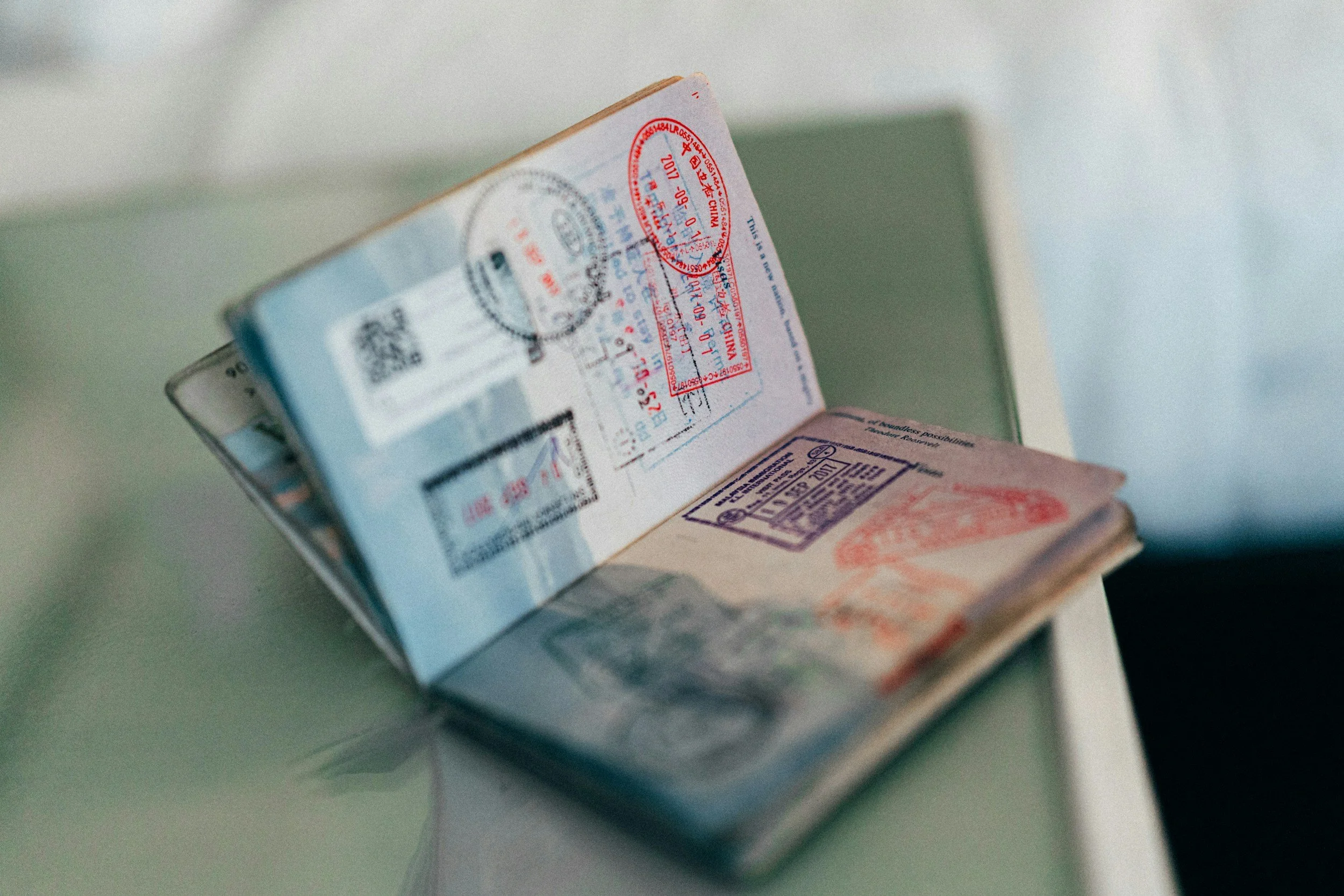
Necessary Evil: Visas part I
This comes from a personal place and was long overdue. First and foremost, I consider myself immensely fortunate and privileged to be able to afford to travel to other places. Second, my experiences are nothing profound, and rather dull compared to the immigration and travel stories I have heard from other people, but they were enough to make me contemplate this issue. The inspiration to write this blog came from my own experiences, but the hardships of travel and immigration faced by all of us from low- or lower-middle-income economies motivated me further, and even more so once I removed myself from the equation. Being very aware of my lack of expertise in this field, I have tried to look at the situation from a bird’s-eye view and get a sense of the big picture. So do not take this as a true reflection of reality, but as my methodical analysis of it.
In a world incredibly divided by social media, biased mass media, and the politics of clout and “aura farming” — and at a time when critical thinking and common sense are treated as heresy or blasphemy — I think this is an important issue to unpack. It is even more important now than ever, because of all the hate directed at people from so-called “third world countries” simply for trying to seek better opportunities outside their geopolitical boundaries. When racist ideologies such as neo-Nazism, ethno-centric nationalistic fascism, and “the great replacement theory” grow stronger with every social media scroll, it is important to remind people what colonization did to the majority of the world, and why a historical and data-driven perspective on geopolitics matters. Simply having opinions isn’t enough; we always need better, more informed ones, and this is my attempt to improve my own.
Why did I get into this?
Well, I tend to be obsessive when I am curious, or when something provokes or inspires me. The need to “get to the bottom of it” is always there. Then a series of uncanny strikes happened in my life. Strike one was my experience with visa applications for Europe and the United States. The bureaucratic hurdles, the unfairly high fees, the uncertainty, the systematic dehumanization, and the paucity of trust in human beings — despite academic and other qualifications — were highly demotivating and discouraging. One ethical double standard I have noticed in most Western embassies and consulates is how they offer applicants no privacy during visa interviews, asking questions about our finances and personal lives in front of fifty other applicants. Would anything similar be accepted by a Westerner? Of course not; for them, most visas are “e-visas” or “visas on arrival.” It is as if our “misfortune” of being born in poorer countries automatically strips us of our right to privacy, dignity, and travel. Even our right to information and to a refund is non-existent once a visa has been denied. The cost of a visa application is sometimes more than a few months’ salary!
Strike two was my experience with customs and immigration in the US. So much anxiety and uncertainty await you after landing, and that is despite conscientiously having the right documents and visa and paying the right — but exorbitantly high, for someone from a low-income country — amount of money. So much is at stake, and yet you remain constantly at the mercy of some whimsical politician’s policies or a moody customs agent — and now the deportations. Our intent, qualifications, and contributions mean nothing.
Strike three was witnessing the general discrimination faced by labor migrants on airplanes, especially those heading toward the Gulf countries and the Arabian Peninsula. These are the people who form the backbone of these oil-rich economies, and the way they are treated would be enough to inspire a 21st-century exodus — except without a Moses. The airline crew’s attitude toward them was poor from the moment they stepped onto the plane, the airport staff were usually unkind, and there was an overlay of entitlement and a lack of empathy from the more privileged passengers, who seemed to regard them as lesser beings. I still remember the day a Nepali man, on his first ever flight on his way to Qatar, asked to use the restroom during a slightly turbulent stretch, and how the stewardess had snapped back, “just keep quiet and hold it.”
Strike four was my experience traveling a few years back, on an exchange visa, with a very weak Nepali passport. Nepal’s Henley passport score is 35, meaning there are only 35 countries we can travel to without a prior visa application, and they are mostly regional. If you want or need to travel anywhere beyond those 35, be prepared to empty your pockets and still face difficulties and uncertainties. At the time, I had been living and working in the United States for a while and was visiting Nepal to see family and friends. The cheapest, most direct flight to Nepal from Detroit routed through Korea’s Incheon airport — with a 25-hour layover! Typically, in large transit hubs like Incheon, travelers can step outside to stay in hotels or take a short tour before their next flight. Just because I held a Nepali passport, I was denied entry beyond the terminal, while a British passenger next to me had no issue whatsoever. I had no intention of staying illegally and abandoning my work and career. Compared to what many others endure, this was only a minor inconvenience. Incheon was state-of-the-art and all, but the airport hotels were full and there weren’t many sleeping pods — so the steel benches it was for me. On the upside, the food was amazing — the best! My family members faced something similar in Hong Kong and at other airports around the world.
Another realization concerned the use of the terms “immigrant” and “expat.” An immigrant is usually presumed to be someone from a lower-income country who moves to an upper-middle- or high-income one for work and better opportunities. The same label is not applied to someone from a high-income nation who emigrates to a less wealthy country to live and work there; they are called “expats” or “nomads” instead. The term “immigrant,” I think, has evolved into a kind of pejorative — unless used purely descriptively — and now signals an unwarranted hierarchy born largely out of the consequences of colonialism. Something similar applies within international organizations: despite similar or even better qualifications, people from lower-income economies tend to be paid less than their wealthier counterparts for the same job description. My wife witnessed this firsthand during her time working for the United Nations. The media narrative, as usual, is tone-deaf on the matter.
These experiences really compelled me to think about our predicament from a broader perspective — what it means to belong to a certain national identity, whether all national identities are justified, and whether nations are a net negative or a net positive for humanity. Do we even need nations? Would there even be nations had people not roamed freely about the planet?
The no-brainer here is that the stronger your passport, the fewer travel restrictions and hurdles you face — which is enormously empowering. A lot of other questions came to mind, especially during my 25-hour ordeal in Korea, and I had been meaning to write a blog about them ever since: Are passports weak just because a country is poor, or strong because it is rich? Does any of this have to do with a history of being a colonizer or being colonized? Do democratic systems, education quality, or conflict status affect a nation’s passport strength? And would diplomatic effort, regardless of wealth, make passports stronger?
So, I decided to investigate and inform some of my questions and you can find that in the next much more interesting part called Necessary Evil: Visas part II