

Part I — The strongest competing ideas on mind and consciousness
There are five especially compelling ideas in science and mathematics which try to explain the nature of consciousness. Each has its own pitfalls, but each has very strong empirical evidence and philosophical argument of its own. Some deal with established scientific ideas, and some deal with cutting-edge science. We will explore what practical utility is borne out of each of them, and what parts of them fail to address real issues. Some of them clash on certain points but agree on others. So what are they? Let’s explore.
To read other blogs in the series click here
Biological naturalism
John Searle’s “biological naturalism” originated in the 1980s and argues that psychological states and conscious experiences are natural (real) higher-level biological phenomena caused by lower-level neurobiological processes in the brain. It strongly asserts that a biological “neural” framework is necessary for consciousness or the mind to appear. Searle argues that just as digestion is a natural and real property of the stomach and the gut, emerging from molecular enzymes and cells acting on food, consciousness is real and thus not an illusion — just as digestion is not an illusion. The famous thought experiment Searle gives is that of an English-speaker locked in a room with a detailed rulebook containing instructions on how to manipulate Chinese symbols to communicate with the outside world. As Chinese symbols are slipped inside through the door, the person uses the rulebook to slip Chinese characters back out as a response. To the outside observer, the room efficiently communicates in Chinese, but the person inside does not understand Chinese, no matter how efficient they are at using the symbols. This is meant to show that mimicking the syntax (usage rules) of language doesn’t automatically attain semantics (the meaning behind the use of language). For Searle, the person in the room is analogous to modern computers and artificial-intelligence (AI) algorithms, because he argues that they mimic the mind efficiently but are not conscious, since to be conscious and to have a mind requires semantic interpretation of language. He also argues that perception precedes thoughts and that actions follow thoughts, so that the mind retroactively assigns meaning to the actions. As a result, he states, meaningful conscious experiences arise even if we may not currently understand the full extent of the neural mechanisms that cause them.
Scientifically, biological naturalism influenced what is known as the neural correlates of consciousness. Neuroscience has, over the years, discovered and mapped exact biological structures in the brain that give rise to certain experiences. For example, there is an area of the brain near the base of the temporal lobes on either side known as the fusiform face area (FFA), which is responsible for face recognition; damage to this area (stroke/seizures/surgery) will cause prosopagnosia — the disappearance of the subjective ability to perceive faces. Similarly, damage to the visual cortex at the back of the brain will cause cortical blindness — the eyes will function and receive light/photons, but the brain cannot perceive this information, so a person is subjectively blind. Biological naturalism also helps explain psychopharmacological and neurosurgical principles very well, and clinically this line of reasoning is used when creating new drugs and therapeutic procedures like deep brain stimulation to treat ailments such as Parkinson’s disease.

Chinese room thought experiment (Source: Google)
Functionalism
Functionalism is a collective idea which originated around the 1960s and 70s through the works of Hilary Putnam and Jerry Fodor, and was later famously defended in the 1990s by philosopher Daniel Dennett. This idea, also known as the “computational theory of mind”, posits that mental states are defined by their functional roles — that is, “because of what they do, and not because of what they are made of”. Functionalism not only compares the mind to software and the brain to hardware in terms of their function, but goes further to say that any non-biological process near-perfectly mimicking or simulating the biological neural structures from the molecular level up could still produce conscious experiences or the mind. Functionalists say that if the system operates in the same way as neural systems (or the brain), the building blocks do not matter, and consciousness can be realized in multiple different ways. Philosophers like Dennett directly oppose biological naturalism and reject it as being too biocentric. They answer John Searle’s Chinese room problem by saying that even if the person in the room did not understand Chinese, the system (the whole room) did. Thus, they argue that the mind is an effect of a process — more like an illusion or a byproduct of sophisticated algorithms — regardless of the hardware being wet neurons or dry silicon. Initially, some functionalists tried to say that this software of the mind would then create subjective experiences (qualia). Daniel Dennett rejected the very existence of qualia and called them an illusion. Dennett famously labeled Searle’s argument for the existence of subjective experiences a “Cartesian Theater” and accused Searle of clinging to a modified Cartesian dualism (the idea that mind and matter/body are separate entities).
The strength of functionalism lies in the fact that it allows room for non-biological systems to realize the mind — whether human-made silicon-based algorithms or conscious alien life forms with completely unimaginable hardware (such as a conscious non-humanoid slime, for example). Biological naturalism is neuro-centric and would fall apart if we met an alien species that is conscious without brains or neurons. Practically, functionalist ideas gave rise to important scientific fields such as the behavioral and cognitive sciences, which map our behavioral and cognitive domains through sophisticated methods and functional imaging modalities and allow us to study conscious and behavioral states such as personality, memory, emotions and attention. Functionalist ideas are also the foundation for modern cognitive and behavioral neuroscience, as well as computer science, artificial intelligence and deep learning neural networks.
Eliminative materialism
Eliminative materialism (EM) originated in the 1980s as well but is even more radical than functionalism. It completely rejects and debunks our anthropocentric assumptions about the mind, such as “belief” or “fear”. It says that we need to drop these terms because they do not exist and are false — being simply our constructs or surrogate assumptions for the exact mechanisms that cause the mind or conscious experiences to originate. Eliminative materialists reject these historical assumptions not because they are angry, but because they have demonstrated that such assumptions do not really explain how the brain works and introduce a lot of noise and red herrings, distracting us from what matters most — the explanation of causes and effects. They point out that in the past people used to think “miasma” (bad air or breath) caused diseases, and that modern science did not reduce or dissect miasma into germ theory; it eliminated the very concept of miasma altogether, once and for all. This idea regards the current human understanding of the mind, with concepts such as “belief”, as a form of “folk psychology” — just as miasma was once a folk theory about disease causation — and eventually rejects “folk psychology” outright. They argue that there is strong evidence that thought processes and emotions can be mapped to specific neural mechanisms in the brain, and that the effect produced (mind or conscious experiences) is a byproduct of that mechanism. Some also call this line of argument “reductive physicalism”.
Take the famous thought experiment of Mary, a neuroscientist trapped in a black-and-white room. She has learned every physical and mathematical fact about the color red — specific wavelengths, codes for different shades, rules for mixing other colors to create red, and so forth — but has never seen the color red herself. If she steps outside one day and sees red, the question is: does she learn something new? This experiment (the “knowledge argument”) was originally devised by philosopher Frank Jackson in 1982 as an argument against physicalism — the intuition being that Mary does learn something new, which would imply that physical facts alone don’t capture everything about conscious experience. Intuitively, most of us are inclined to answer “yes”, because we give importance to our subjective experiences. Eliminative materialism says no: Mary did not learn any new fact, because her sense of a private “what it’s like” is just a subjective gloss on the wavelength of reflected light and adds nothing pragmatic. We might be inclined to argue back, but EM does compel us to think outside our cognitive boxes. Your experience of the color red is not the same as mine, yet if I were color-blind, we could test it through something like the Ishihara chart in the clinic and tell the difference. Maybe subjective experiences aren’t that important, and maybe we are simply tuned by evolution to think they are.
The strength of EM comes from demonstrations via validated and reproducible experiments over decades. Since the 1960s we have known that when the structure connecting the left and right hemispheres of the brain (the corpus callosum) is cut, the two hemispheres can function independently, sometimes desiring and experiencing contradictory or different things (for example, one hand tries to put on a shirt while the other takes it off). It appears that the two halves of the brain can act as though each had its own will, whereas, had the corpus callosum not been severed, they would have functioned as one unit. Eliminative materialists take this as strong evidence against the intuitive notions of a unified “free will” or “self” — categories EM regards as “folk psychology”, much as science now treats “miasma”. It is worth noting, though, that this is an interpretation of the split-brain findings rather than a settled result; the experiments are highly suggestive about the unity of consciousness, but they do not by themselves prove that free will or the self does not exist.
This has shifted modern evidence-based psychology as well; current research is increasingly focused on diagnosing and treating patients based on observable, physical circuit or network dysfunctions rather than self-reported “folk” symptoms (like feeling depressed).
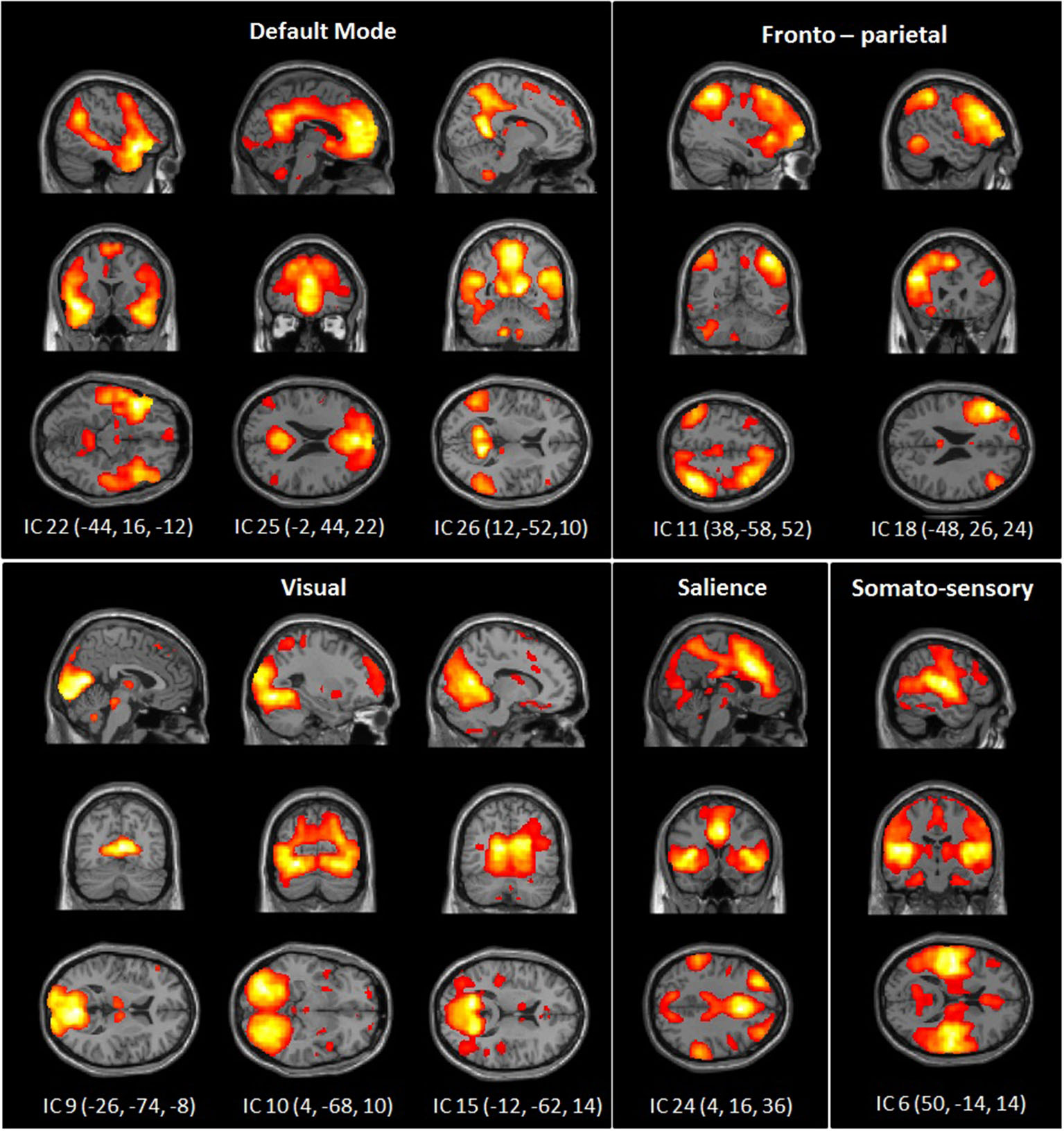
A series of resting functional MRI showing active default mode and fronto-parietal mode networks in the brain of someone with anorexia nervosa (a kind of eating disorder) (Source: Elsevier)
Basal cognition
Basal cognition (BC) is not exactly a philosophical idea, but rather an inference informed by empirical observations. This idea came from the work of Michael Levin and his team fairly recently, around the 2010s. Citing examples from his validated experiments, Levin and his team argue that things like memory, learning, problem-solving and especially “goal-directed behavior” (collectively known as cognition) do not just magically appear when brains come into existence through evolution, but rather exist on a continuous spectrum which scales up from the simplest cellular and molecular biological networks or processes. Levin argues that cells are not just inert mechanical building blocks but are active information-processing “agents” which communicate through bioelectricity to build complex systems like organs and body plans. Basal cognition is a bottom-up idea when explaining the origin of consciousness and the mind. The inference is that what we call the mind probably is an emergent property of these smaller agents — each with a mind of its own — collectively forming a larger, more layered, and more sophisticated system. This is like saying that the “mind” is to its component agents what a “human society” or “culture” is to individual people. There can exist no society or culture without individual human agents forming a larger, more layered and sophisticated collective from which concepts like culture and society emerge. Similarly, the mind cannot emerge without the organization of lower-level biological agents.
Science has typically treated DNA as a blueprint for every biological process since the 1950s, but basal cognition disagrees with this approach, treating DNA as the hardware around which bioelectrical properties act like software. It treats cells as swarms of autonomous robots which form tissues or organs by interacting with each other through bioelectrical properties.
The strength of Levin’s idea comes from the demonstration of this concept through remarkable scientific experiments. His team scraped some skin cells off a frog embryo and discovered that these cells, despite being isolated, formed a novel non-frog organism of their own that could solve problems like navigating mazes. This was an example of what Levin calls “goal-directed behavior” present even in non-nerve tissues. Previously this was studied as the phenomenon of “taxis” in animal cells and “tropism” in plants and fungi. Levin expanded on these concepts and gave them more importance as an example of goal-directed behavior, which he argues is the same as having a mind. He argues that it might be primitive and intellectually dishonest to dismiss this phenomenon as mindless, and appeals to us to think of these individual cellular units as having a purpose of survival, guided by their ability to process information about their surroundings with their minds (their capacity to perform goal-directed behavior). Another example was his team’s experiment in 2013, in which they trained planarian worms to navigate a maze to find food. Once the worms had learned this behavior, the researchers cut off their heads. These worms can regenerate body parts, and the team discovered that they grew entirely new heads — and thus entirely new brains — but were still able to remember the maze training. They demonstrated that memories could be stored in non-neural tissues and cells as well, shattering the neuro-centric ideas of biological naturalism.
In an interview, Levin once suggested that subjective experiences may be important, but that there was no way for us to know for sure. He argued that because the scientific method is limited to third-person observation, in order to study conscious experiences someone would have to connect or transfer their own consciousness into that of the subject, which is not possible with current technology — something like the mind-transfer technology shown in the Avatar movies, which Levin suggests would be a requisite for studying conscious experiences directly. He adds that until we have such a technology, it would be more pragmatic to study and describe the processes which give rise to consciousness rather than to have armchair philosophical debates about what it is.

Michael Levin’s “Xenobots” or cells scraped off a frog embryo which did not turn into a frog, or frog organsa but functioned as a different novel organism able to solve problems (Source: Google stock photos)
Integrated information theory
Integrated information theory (IIT) was first described by Giulio Tononi of the University of Wisconsin around 2004 and later popularized by computational neuroscientist Christof Koch. This idea speculates that consciousness is a quantifiable property of the universe and does not assume that consciousness comes only from neurons or the brain — somewhat like basal cognition, except that, in contrast to basal cognition, this is more of a top-down approach than a bottom-up one. It takes the established axioms about the properties of consciousness (consciousness as something that is specific and definite, is composed of differentiated states, and integrates those differentiated states simultaneously) and tries to see what physical systems (biological or non-biological) can support it. It removes itself from neuro-centrism and even biocentrism: what matters is not the biological material a system is made of, but whether that material implements the right kind of physical cause-effect structure. In other words, IIT postulates that consciousness exists in any system with enough differentiation (many different possible states) and integration (the many different parts of the system causally interacting to create an effect).
Mathematically, IIT proposes a model in which it defines consciousness as a fundamental property of the universe that can be quantified by a metric called Φ (Phi). To put it simply, IIT posits that consciousness is measurable like mass, gravity or electrical charge, and is not magical. It tries to describe consciousness as a structural property of how matter is physically arranged. According to IIT, a highly organized and interconnected network such as a neural network has a high Φ, whereas a disorganized collection such as a pile of sand or a rock has a low Φ. IIT therefore predicts that systems like neural networks have consciousness because of their high Φ value.
A famous thought experiment by Tononi is that of the minimally conscious photodiode. He asks us to imagine a digital camera with a photodiode (light sensor). When the sensor detects light, it turns on, and when it doesn’t, it turns off. Then he asks you to imagine yourself staring at a blank but bright screen, and says that you also register this input of information as “light”. He then asks whether there is a difference between the photodiode detecting light and you experiencing light. He argues, from an engineering perspective, that both systems are just differentiating between two states (light vs. dark), but that there is a huge mathematical and physical difference in what he calls the repertoire of unchosen alternatives. The repertoire of unchosen alternatives is a fancy way of saying that information of any kind is defined by what it is not — for instance, an experience only has meaning, depth and consciousness based on how many other possible experiences you are ruling out at that exact moment. In other words, the higher the level of your consciousness, the greater the number of “things you are not experiencing”.
Going back to the photodiode example: when it is on, it is only ruling out the absence of light (the off state), but has no information about the presence or absence of color, shape, motion or meaning. When you are experiencing “light” from the blank but bright screen, however, you are not just ruling out the absence of light but are simultaneously ruling out billions of other possible experiences — for instance the blue sky, a moving car, a story, the feeling of a tickle, the musical intro of your favorite song, and so on. In other words, when you are staring at the blank but bright screen, your experience is not just saying “not dark” but also “not a barking dog”, “not a red apple”, “not the face of a friend”, and so forth.
IIT then goes to a more sophisticated level to calculate the differences in the quantity and states of this conscious and unconscious information, in order to eventually calculate the value of Φ. If you cut or dismantle a system such as a hard drive or a digital camera in half, there will be no difference between its integrated and dis-integrated states, and thus Φ = 0 (the system is “empty” inside, as its components and their summed-up state have no cause-effect integration). But if you disintegrate the brain or cut it in half, you will find a huge difference between its state when integrated and its state when dis-integrated, with a Φ value greater than 0 (so the system is not empty inside, because its components and their summed-up state do have cause-effect integration). Importantly, IIT does not hold that any powerful “intelligent” machine is therefore conscious. On the contrary, a key and controversial prediction of IIT is that a conventional digital computer — including today’s large language models, whose architecture is largely feed-forward — would have a very low or near-zero Φ despite behaving intelligently, because its physical cause-effect structure lacks the dense, recurrent integration that generates high Φ. Under IIT, high Φ requires sophisticated feedback loops rather than relatively simple feed-forward processing; consciousness tracks that physical architecture, not intelligent behavior as such. This is one of the sharpest points of disagreement between IIT and functionalism.
The most promising practical utility borne out of IIT is something known as the perturbational complexity index (PCI), used in the clinical study of conscious states in comatose patients. In the intensive care unit (ICU), and especially the neurocritical care unit, one question that always haunts the clinician is whether someone who appears comatose is actually conscious or not — because it has pragmatic, moral and ethical implications for prognosis. We currently have clinical tests and ancillary imaging modalities to make the best guess as to whether someone is conscious (for example, in brain-dead patients, where the body is alive but the brain is irreversibly dead, or in those with locked-in syndrome, where the brain is thought to be conscious but the patient is completely paralyzed). PCI (informally known as the “zip-zap” method), through the use of transcranial magnetic stimulation (TMS), electroencephalography (EEG) and a sophisticated mathematical computer program, has shown evidence that it can predict conscious states with great accuracy, as opposed to current clinical guesswork. Although the method is still in its infancy and carries numerous cost and practical considerations, there are ongoing studies and trials around the world hoping to translate this promising discovery into real-life clinical practice soon; it could prove to be revolutionary if successfully done.

A comatose patient in the ICU (Source: Google stock photos)
Conclusion
All these competing ideas agree and disagree with each other, but each is scientifically or mathematically validated in different ways. What they agree on without doubt are two things: they all reject dualism (the idea that mind and matter are separate), and they all agree that consciousness arises from a reproducible and sophisticated physical framework of some sort. The disagreements are mostly about the specific mechanisms by which physical states produce conscious experiences, and about whether the final state of that system we call “mind” or “consciousness” is a real, measurable thing or just a byproduct (or illusion) of the system that produces it. They all have parts of their argument supported by various scientific experiments, and parts that are currently only inferences or speculation.
Regarding the question of whether conscious experiences (qualia) are real or not, biological naturalism and IIT agree that conscious experiences are real properties of the universe; IIT also provides a mathematical framework to quantify this, whereas biological naturalism only describes it philosophically through thought experiments. Functionalism and EM completely reject this and assert that conscious experiences are “fake” illusions, and thus not a real property of the universe but rather a byproduct of a complex, sophisticated system of machinery. Basal cognition is agnostic or undecided about this and states that the debate over whether consciousness is real or fake might not be as important as we are making it out to be, though it doesn’t rule out either possibility. This idea focuses more on the concept of simpler modular goal-directed agents, guided by natural selection, emerging into more complex goal-directed systems which we might refer to as minds or consciousness.
Regarding the substrate and mechanisms of consciousness, biological naturalism argues that carbon biology (specifically neurons) is a must, whereas basal cognition demonstrates that biological processes are a must, though not necessarily neurons specifically. Functionalism and EM both argue that biology or substrate is not necessary, and that even non-biological systems (silicon-based AI systems or algorithms) could produce the illusion of conscious experiences. IIT posits that substrate does matter — not in the sense of requiring biology, but in the sense that any conscious system must have the right kind of physical cause-effect architecture, which can in principle be measured and reproduced. IIT thus gives us an open-minded framework within which to study consciousness even in non-biological systems, such as AI or potential non-carbon-based alien lifeforms.
I find them all fascinating, and think they all have agreed-upon practical utility of some kind in spite of their differences. Regardless of the different approaches, they are still unable — as yet — to answer Thomas Nagel’s famous question, “What is it like to be a bat?” More recently, I have been leaning into Michael Levin’s line of thought, which holds that, whether consciousness is real or fake, you could not know unless you transferred your mind into that of the bat — but then you always run into the question: would it be the bat or you doing the experiencing through this new merger? To bring the Avatar analogy into this context, would it be the human Jake Sully or the Na’vi Jake Sully experiencing Pandora? Maybe that question does not matter at all.
