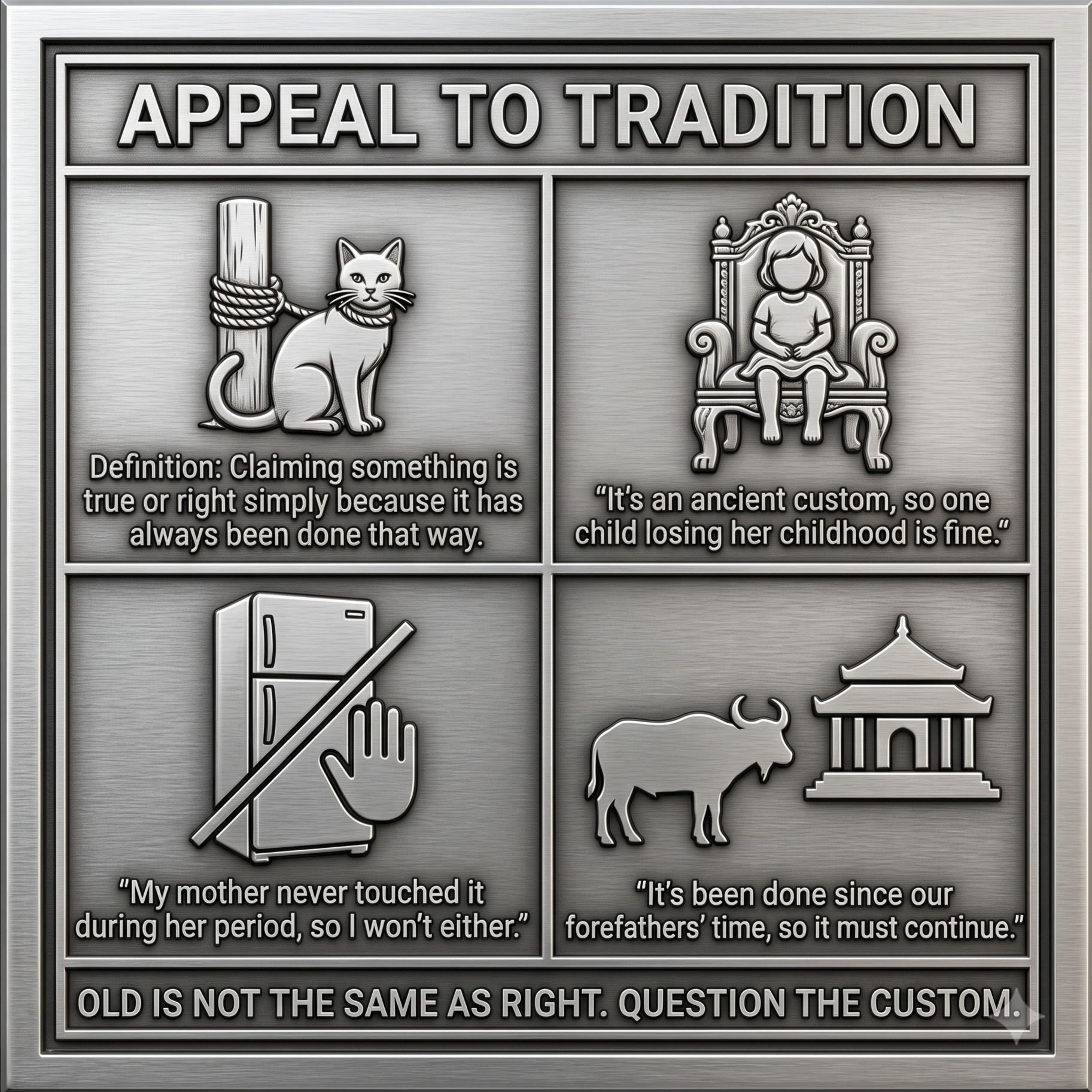
This fallacy treats something as right or true simply because it has been done that way for a long time. But age is not proof of correctness — a custom can be old and still be wrong or harmful. Every tradition deserves to be judged on its merits, not just its longevity.
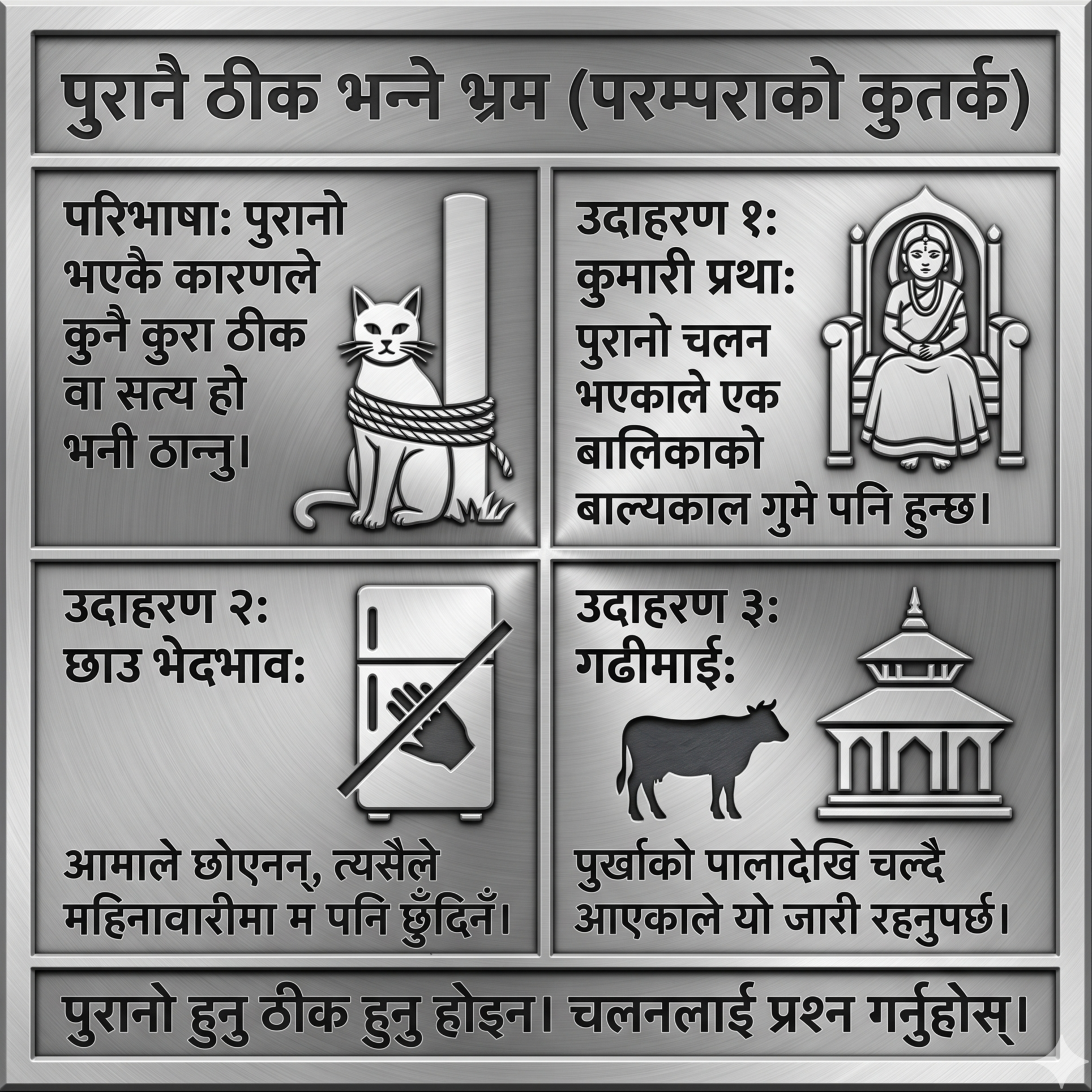
लामो समयदेखि चल्दै आएकै कारण कुनै कुरा ठीक वा सत्य हो भनी मान्नु यो कुतर्क हो। तर पुरानो हुनुले सही हुने प्रमाण दिँदैन — कुनै चलन पुरानो भएर पनि गलत वा हानिकारक हुन सक्छ। हरेक परम्परालाई उमेरले होइन, त्यसको औचित्यले जाँच्नुपर्छ।
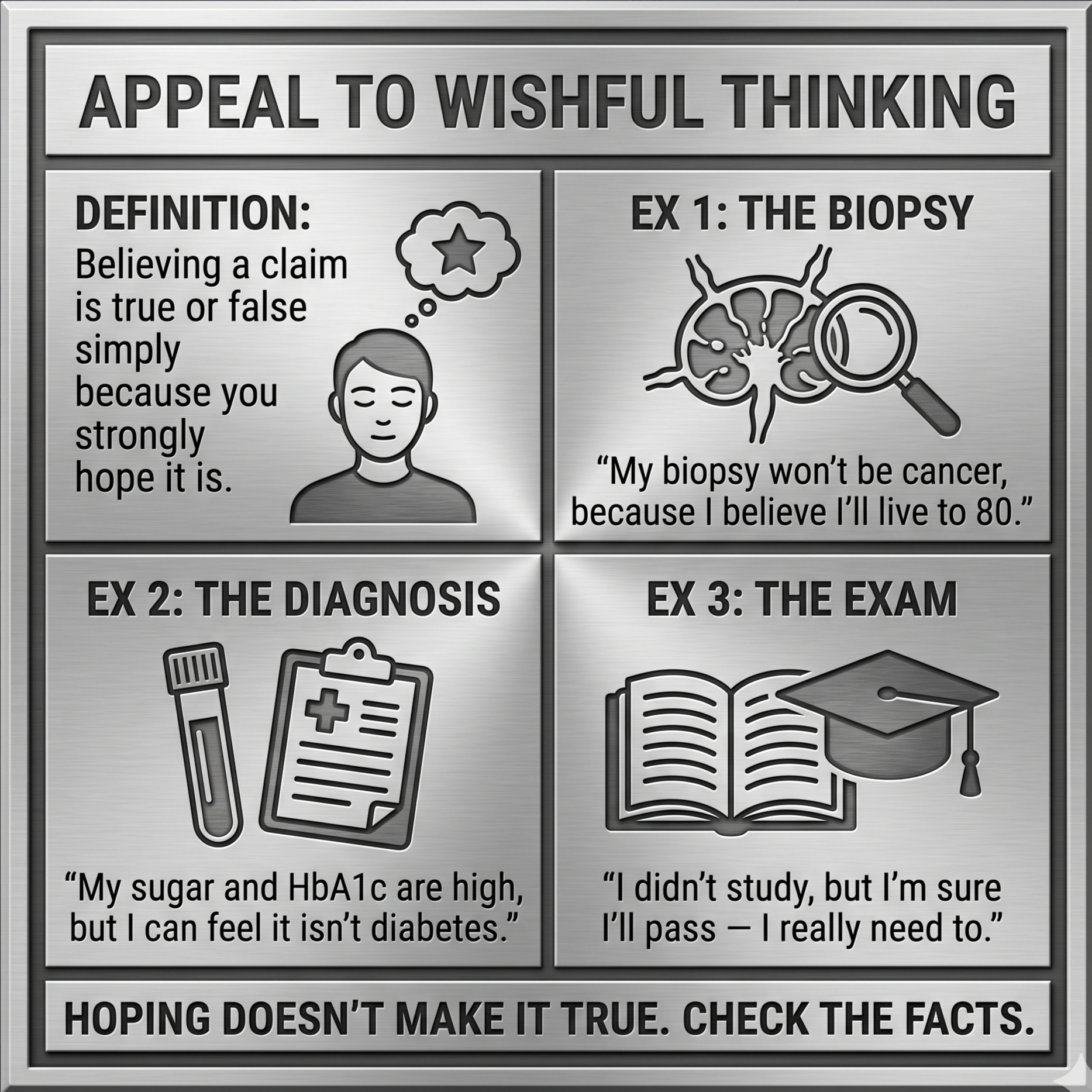
This fallacy concludes that something is true or false based on what you hope, not on what the evidence shows. But wanting an outcome cannot change reality — hope and fact are separate things. Especially in matters like health, comfort must never replace honest verification.
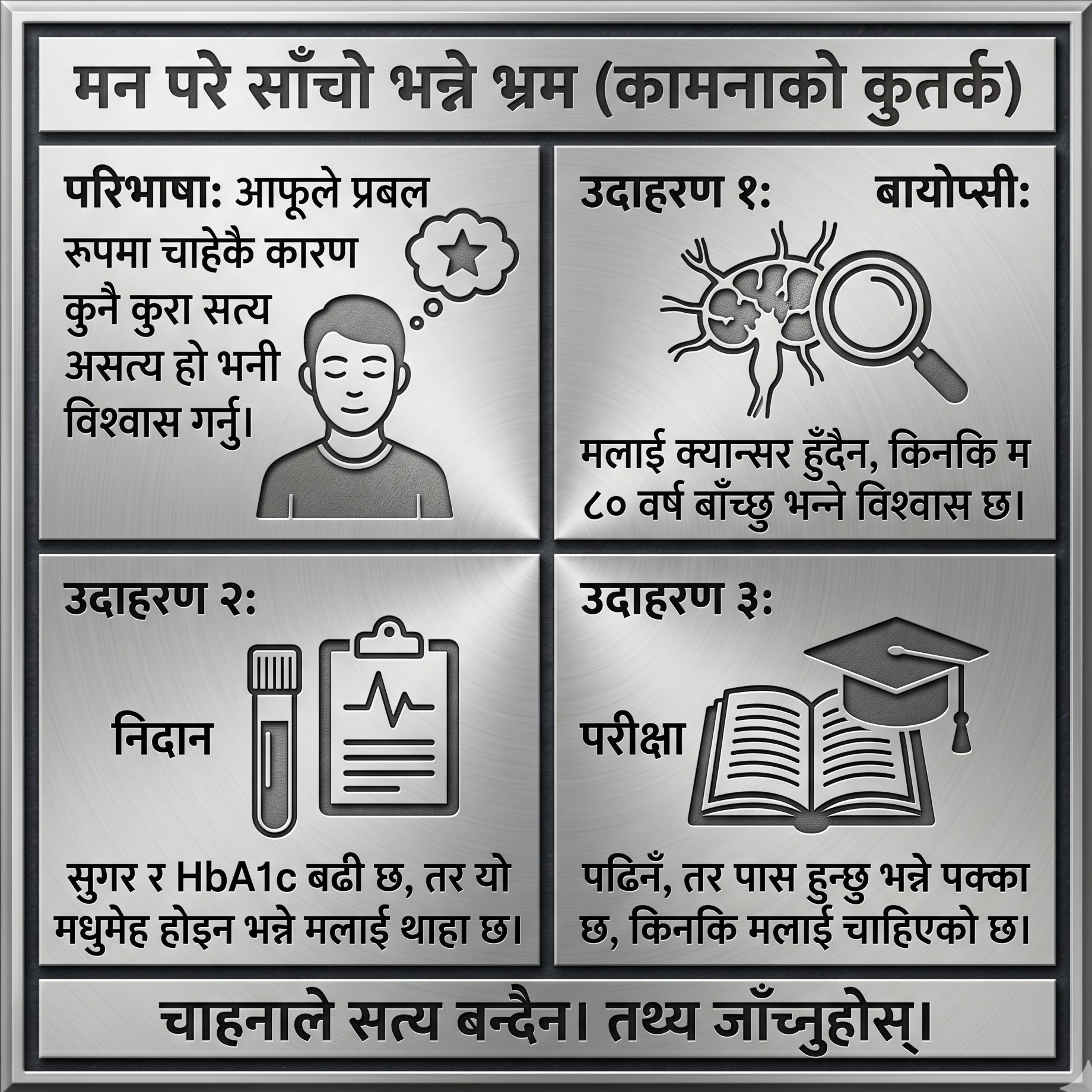
प्रमाणले होइन, आफूले चाहेकै आधारमा कुनै कुरा सत्य वा असत्य हो भनी निष्कर्ष निकाल्नु यो कुतर्क हो। तर कुनै परिणाम चाहनाले वास्तविकता बदलिँदैन — आशा र तथ्य फरक कुरा हुन्। विशेषगरी स्वास्थ्यजस्ता विषयमा सान्त्वनाले कहिल्यै इमानदार जाँचलाई प्रतिस्थापन गर्न हुँदैन।
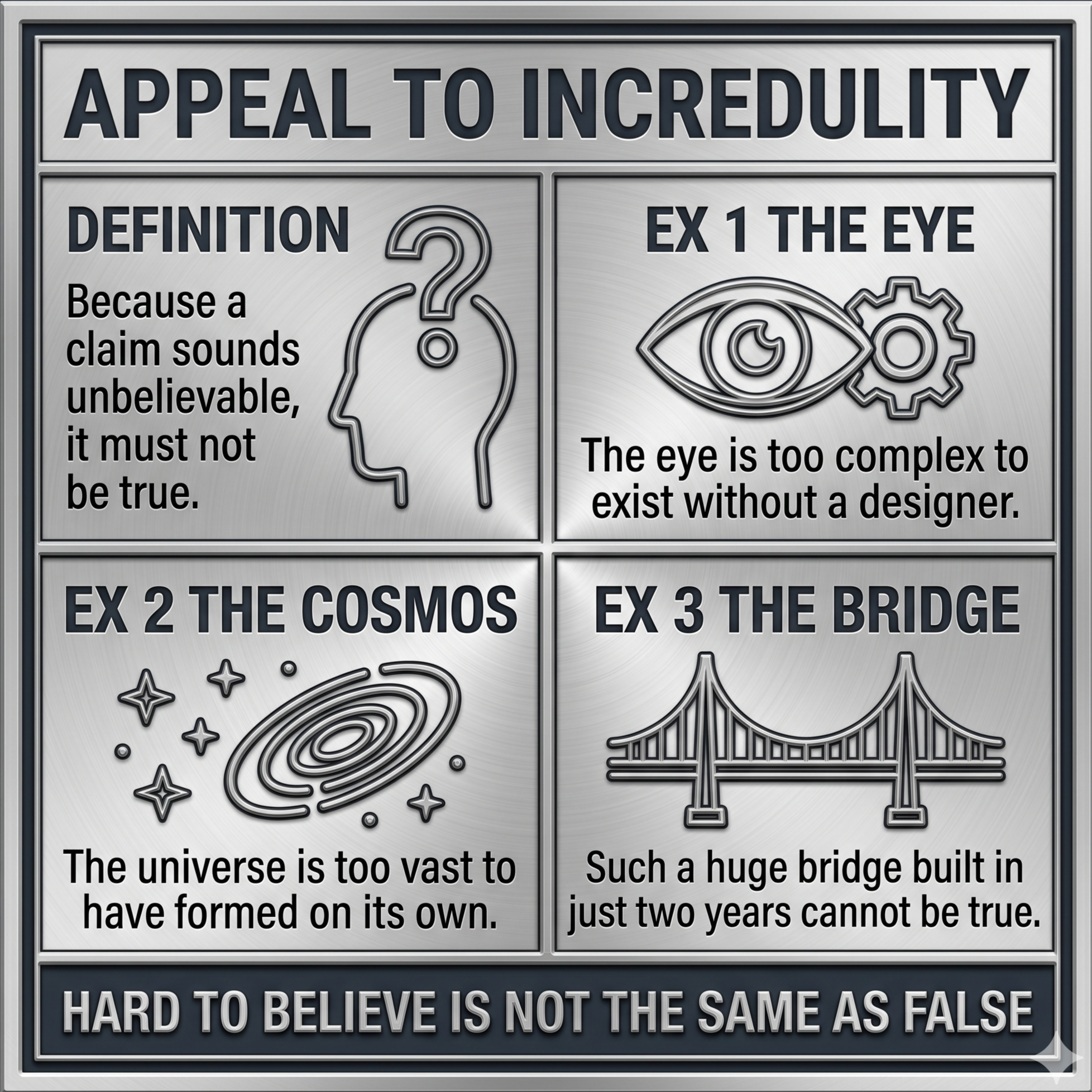
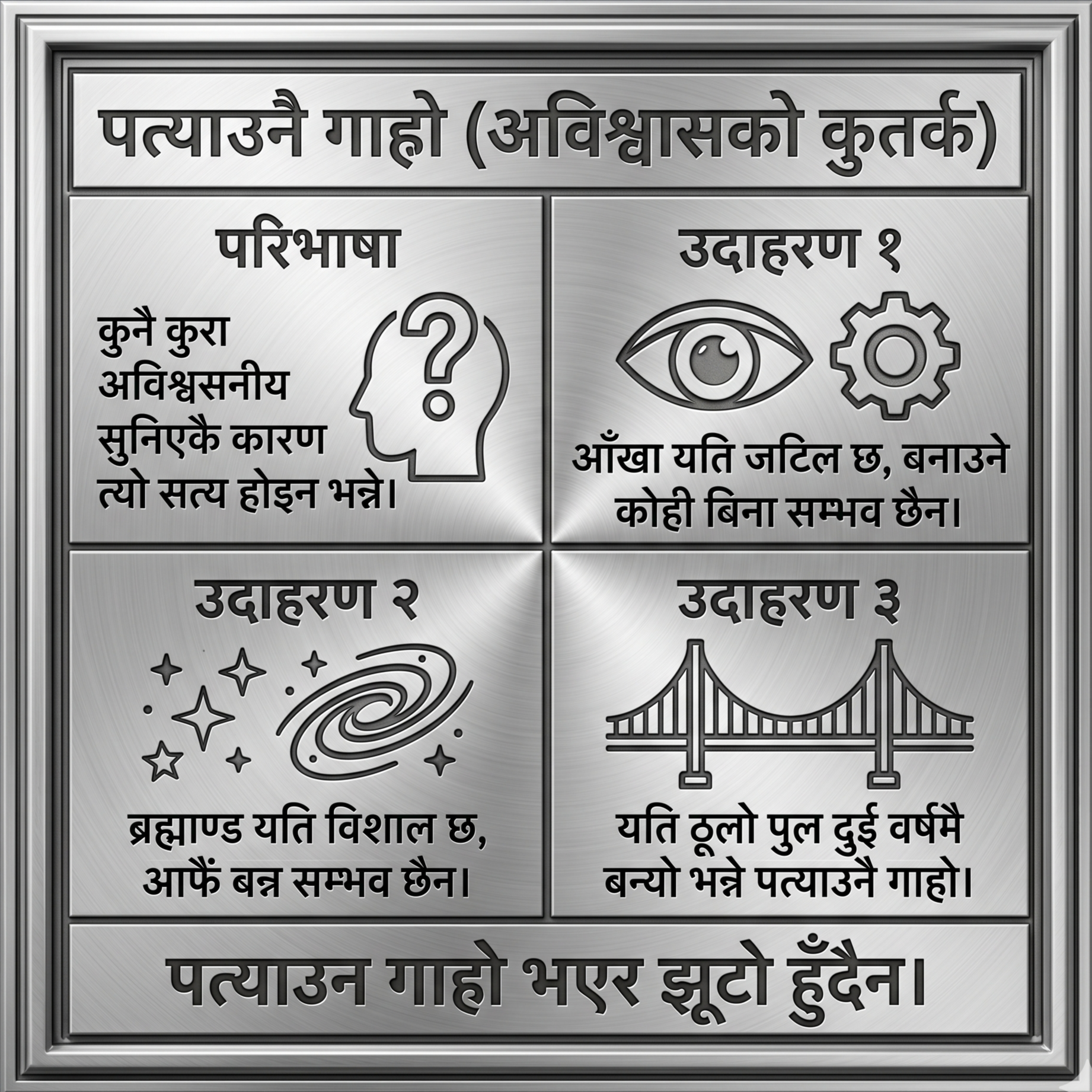
The appeal to incredulity treats a claim as false simply because it is hard to imagine or feels unbelievable. It fails because the limit being tested is your own intuition, not reality — many true things are counterintuitive, and a personal failure to picture how something works is not evidence against it. The correct approach is to ask what the actual evidence shows, and to treat "I can't believe that" as a starting question rather than a conclusion.